The power of effective coalitions and collective action in building trust and achieving sustainable development
Source of the News:
The power of effective coalitions and collective action in building trust and achieving sustainable development
Maria Poli
Mathieu Cloutier
Samuel Garoni
Sandra Valdivia Teixeira
May 22, 2024
https://blogs.worldbank.org/en/governance/the-power-of-effective-coalitions-and-collective-action-in-build
The power of coalitions and collective action plays a crucial role in achieving sustainable development and building trust. Examples from Bosnia and Herzegovina and the Dominican Republic show how effective cooperation can lead to positive outcomes; such as a 20% increase in waste collection in Bosnia and saving over $20 million in drug purchases in the Dominican Republic. Experience has shown that the success of many policies and programs depends on their ability to foster cooperation among individuals and groups, and such collaborations can reduce resistance to change and accelerate the adoption of reforms.
The coalition program for reforms offers a tripartite approach to solving collective action problems and managing change. Achievements of this program include creating cohesive teams for structural changes in governments and civil institutions, mobilizing various groups to support reforms, and improving communication between the government and citizens. For example, in the Dominican Republic, a coalition of private sector, government, and civil leaders was able to implement anti-corruption reforms, and in Bosnia, reform teams laid the groundwork for improved financial management and increased efficiency in the waste management system.
One of the main obstacles to implementing reforms is the lack of sufficient cooperation among various stakeholders. In many cases, the issue is not in designing new policies but in the complexities of collective implementation and the resistance of powerful interests to change. To achieve sustainable development, having technical expertise alone is not enough; special attention must be paid to human dynamics and communications among them, as these dynamics determine the success or failure of reforms.
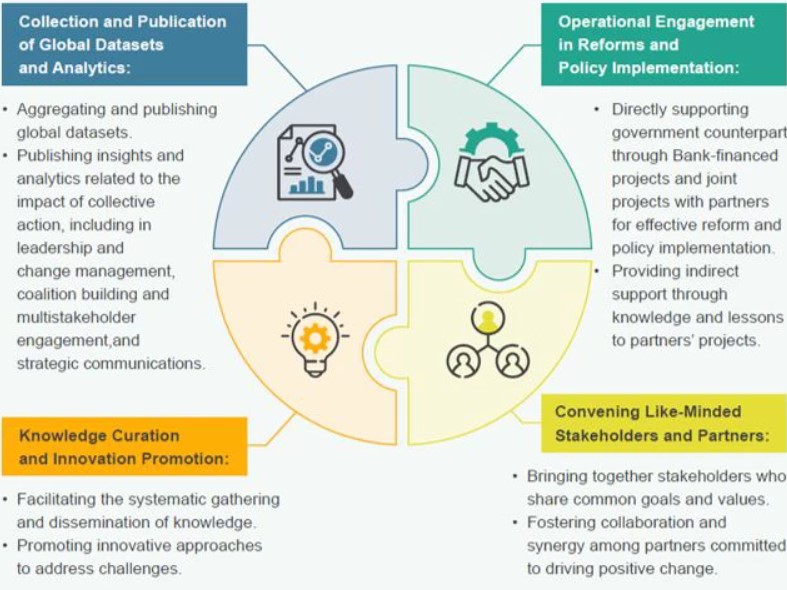
This need for a shift in approach and focus on cooperation among government, civil society, the private sector, and the media has led to the adoption of more flexible and intelligent methods in development. The ‘Coalitions for Reforms’ program, supported by the World Bank, aims to strengthen leadership skills, create effective coalitions, and manage change to address development challenges through collective action.